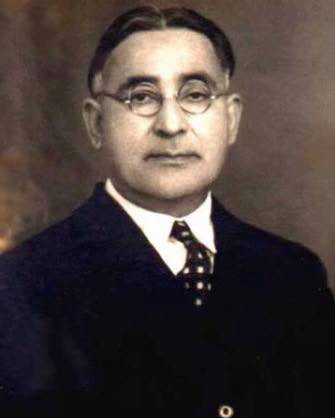
Munshi Ahmad Jan
When discussing the literary and intellectual personalities of Bannu, the name of Munshi Ahmad Jan is remembered with great respect. Born in 1870 in Bannu, he became one of the most influential Pashto authors, educators, and linguists of his time, leaving behind a remarkable legacy that continues to inspire generations. At a time when Pashto literature was dominated primarily by poetry, Munshi Ahmad Jan played a pioneering role in promoting simple, accessible, and prose-based writing. For this reason, he is widely regarded as one of the founding figures of modern Pashto prose. He authored several important works, including "Da Qissa Khwani Gap," "Hagha Dagha," and "Ganj-e-Pashto." Some of his books were even used during the British colonial period to teach the Pashto language to British military officers, reflecting the depth of his scholarship and mastery of the language. Munshi Ahmad Jan was not only a distinguished writer but also an exceptional teacher. He devoted much of his life to education, research, and the promotion of the Pashto language. His writings gave Pashto prose a new direction and served as a source of inspiration for many later writers and scholars. On 16 October 1951, this great literary figure passed away, but his intellectual and literary legacy remains alive to this day. Bannu is not only a land of brave people; it has also been an important center of knowledge, literature, and culture. Munshi Ahmad Jan stands as one of the brightest names in this proud tradition and remains a symbol of Bannu's rich literary heritage.
Pioneer of Modern Pashto Prose